


Joint Drainage (Aspiration) Calgary
Joint drainage, also called joint aspiration, is a procedure used to remove excess fluid from a swollen joint. At Pro Motion Calgary, we provide joint drainage in Southeast Calgary to help reduce pressure, improve movement, and support accurate diagnosis when needed.
Swelling inside a joint can cause tightness, pain, and limited range of motion. Removing excess fluid may help relieve discomfort and restore mobility.
Our clinic is located in the Southcentre Executive Tower at 403 – 11012 Macleod Trail SE, near Southcentre Mall. We serve patients from Willow Park, Canyon Meadows, Lake Bonavista, Acadia, Southwood, Haysboro, Riverbend, Quarry Park, Queensland, and Millrise.
What Is Joint Drainage?
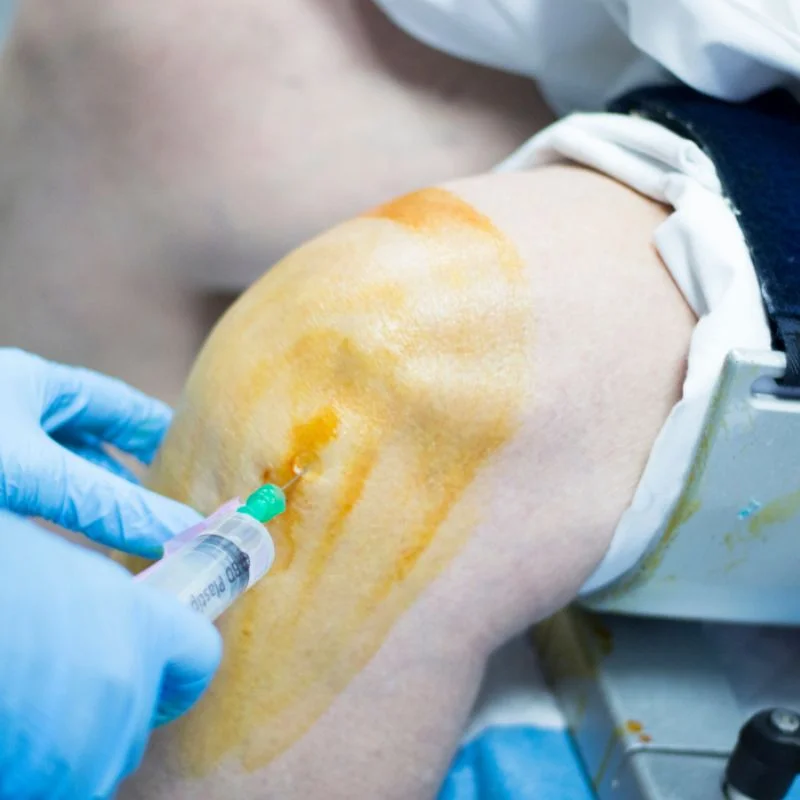
Joint drainage, or aspiration, is a procedure that removes fluid from inside a joint using a sterile needle.
Healthy joints contain a small amount of fluid that lubricates movement. When inflammation develops, fluid can build up. This may cause swelling, stiffness, and discomfort.
By removing excess fluid, pressure inside the joint decreases. This often improves range of motion and reduces tightness.
Joint drainage is commonly performed in the knee but may be used in other joints when appropriate.

When Is Joint Drainage Considered?
Joint drainage may be considered when swelling becomes significant or painful.
It is often used for:
- Knee swelling
- Arthritis flare-ups
- Situations where fluid needs to be tested for diagnostic purposes
During an arthritis flare, fluid can accumulate rapidly inside the knee joint. This buildup may make bending or straightening the knee difficult.
In some cases, fluid removal also helps determine the cause of swelling. The fluid may be sent for laboratory testing to evaluate infection, inflammation, or crystal-related conditions.
Candidacy depends on the clinical presentation and medical history.
Depending on your condition, cortisone injections in Calgary may be considered to help calm ongoing inflammation.
The Goals of Joint Aspiration
Joint drainage has several possible goals.
First, it may reduce pressure and pain caused by fluid buildup.
Second, it may improve range of motion by relieving tightness inside the joint.
Third, it may assist with diagnosis if fluid analysis is needed.
In some cases, aspiration is followed by a therapeutic injection during the same visit. Removing fluid first can create more space within the joint and improve medication distribution.
Each situation is assessed individually.
What Causes Joint Fluid Buildup?
Joint swelling can develop for several reasons.
Common causes include:
- Osteoarthritis
- Inflammatory arthritis
- Overuse injuries
- Trauma
- Ligament or meniscus injury
- Gout or crystal-related conditions
When the lining of the joint becomes irritated, it may produce excess fluid. This fluid buildup increases pressure inside the joint capsule.
The knee is particularly prone to swelling because it is a large, weight-bearing joint.
What to Expect During the Procedure
Joint drainage is performed in a clinical setting.
The skin over the joint is cleaned carefully. When appropriate, ultrasound guidance is used to visualize fluid inside the joint. This supports accurate needle placement.
A sterile needle is inserted into the joint space to remove fluid. The amount removed varies depending on the degree of swelling.
The procedure usually takes only a few minutes. Some patients feel pressure during the aspiration, but it is generally brief.
If a therapeutic injection is planned, it may be administered after the fluid is removed.
What Happens After Joint Drainage?
Most patients return home the same day.
Mild soreness at the injection site may occur for 24 to 48 hours.
Reducing excess fluid often leads to noticeable improvement in joint movement and comfort. However, underlying inflammation or joint conditions may still require further treatment.
After fluid is removed, guided physiotherapy in Calgary can help you safely regain joint function and reduce stiffness.
Your provider will discuss whether additional management is needed. This may include:
- Rehabilitation exercises
- Activity modification
- Anti-inflammatory strategies
- Injection therapy


Joint Drainage and Diagnostic Testing
In some cases, joint aspiration is performed to analyze joint fluid.
Fluid testing can help identify:
- Infection
- Inflammatory conditions
- Crystal-related arthritis
This information may guide treatment decisions.
If laboratory testing is needed, the fluid sample is sent for analysis.
Risks and Safety Considerations
Joint aspiration is commonly performed and generally well tolerated. However, as with any procedure, there are potential risks.
Possible side effects include:
- Temporary soreness
- Minor bruising
- Bleeding at the injection site
Infection is rare but possible.
A thorough medical review is completed before the procedure to minimize risk.
Joint drainage may not be appropriate if there is active skin infection over the area or certain bleeding disorders.
Joint Drainage as Part of a Broader Care Plan
Removing excess fluid can relieve pressure and improve movement. However, it does not correct the underlying cause of swelling.
At Pro Motion Calgary, we combine joint procedures with structured rehabilitation when appropriate.
Depending on your diagnosis, your plan may include:
- Strengthening exercises
- Stability training
- Load management
- Joint protection strategies
This approach supports longer-term joint function.
Injection Therapy Provided by Alexander Yeung, MN, BScN, BKin
Joint drainage at Pro Motion Calgary is performed by Alexander Yeung, Family Nurse Practitioner.
He holds a Master of Nursing and a Bachelor of Science in Nursing from the University of Regina. He also earned a Bachelor of Kinesiology with distinction.
His background includes emergency medicine and intensive care experience. He focuses on musculoskeletal conditions and integrates movement assessment with medical care.
Ultrasound guidance is used when appropriate to support accurate joint access.

Why Choose Pro Motion Calgary for Joint Aspiration?
Patients choose our Southeast Calgary clinic because we provide:
- One-to-one private treatment sessions
- Ultrasound-guided precision
- A collaborative and low-pressure environment
- Integrated rehabilitation planning
- Direct billing options
- Online booking
We take time to explain your diagnosis and next steps clearly.
Conveniently Located in Southeast Calgary
Our clinic is located in the Southcentre Executive Tower at 403 – 11012 Macleod Trail SE, near Southcentre Mall.
We are easily accessible from Macleod Trail and Anderson Road. Patients from Willow Park, Canyon Meadows, Lake Bonavista, Acadia, Southwood, Haysboro, Riverbend, Quarry Park, Queensland, and Millrise can reach us quickly.
Parking is available in the building. Public transit routes run along Macleod Trail, making visits manageable for follow-up care.
Frequently Asked Questions
Does joint drainage hurt?
How much fluid can be removed?
Will swelling return after aspiration?
Is joint aspiration only for the knee?
Can fluid be tested after removal?
Is joint drainage safe?
Can I walk after knee aspiration?
Is a referral required?
In many cases, a referral is not required. Our team can confirm when you book.
If you are experiencing joint swelling and would like to explore joint drainage in Southeast Calgary, contact Pro Motion Calgary at (403) 452-5450 or book online to schedule an assessment. We will determine whether this procedure fits your diagnosis and treatment plan.