
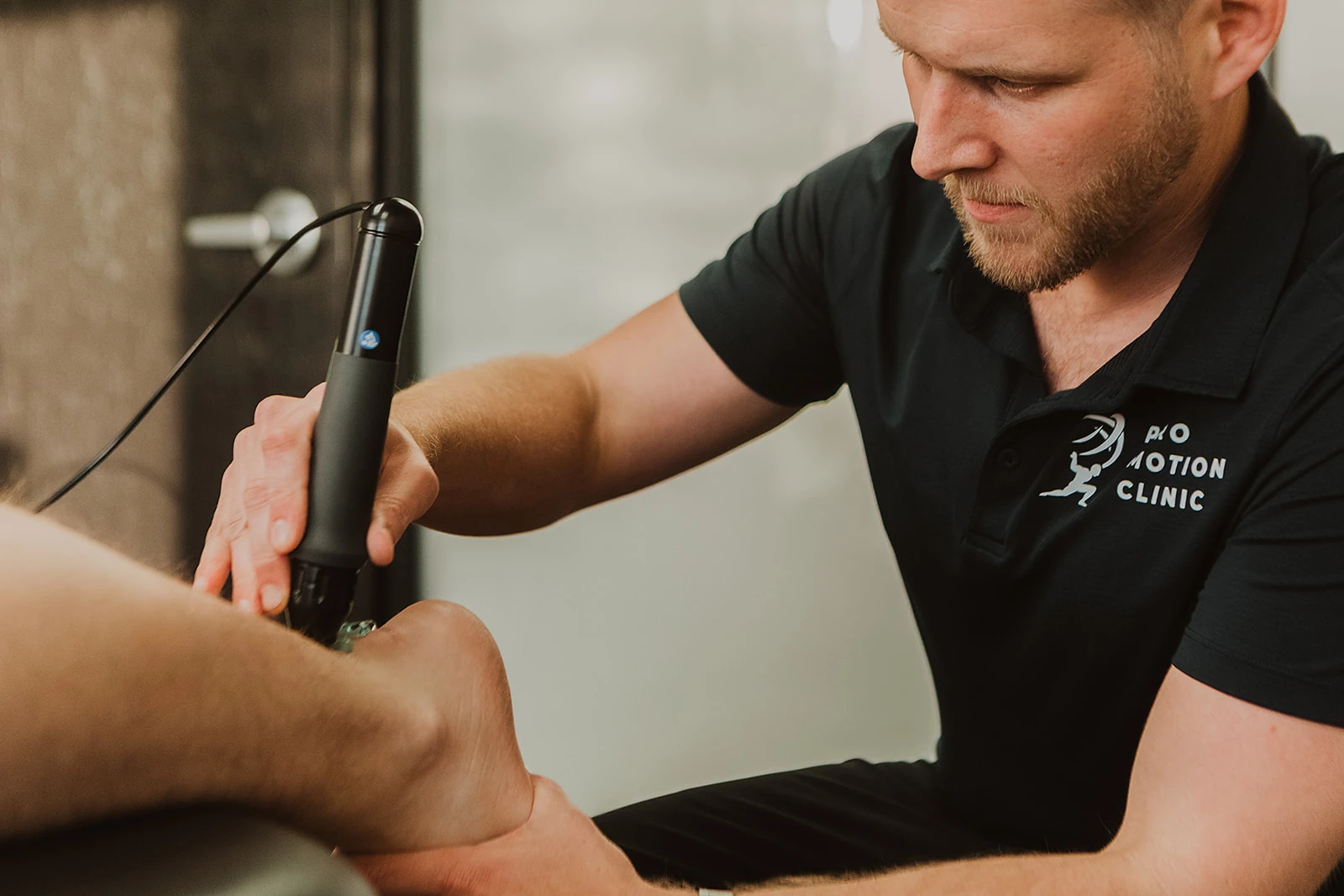
Shockwave therapy is one option our physiotherapists may include in a broader rehabilitation plan for certain persistent tendon and soft-tissue conditions. An assessment comes first so we can determine whether it fits your injury and goals.
If you have been dealing with tendon pain for weeks or months, it is reasonable to wonder whether another treatment could help you move forward. Pro Motion Calgary provides shockwave therapy in Calgary as part of physiotherapy care at our South Calgary clinic near Southcentre. It may be considered for some persistent tendon and soft-tissue conditions, but it is not automatically the right choice for every painful area. Your physiotherapist will first listen to what has been happening, examine the area and talk with you about the activities you want to return to.
The assessment matters because two people can feel pain in the same place for different reasons. Heel pain, for example, may involve the plantar fascia, a nearby joint, a nerve or another structure. Starting with a careful assessment gives your physiotherapist a better basis for deciding whether shockwave belongs in the plan, whether another approach makes more sense, or whether further medical review is needed.

Shockwave therapy uses mechanical acoustic pulses that are directed at a specific area of the body through a handheld applicator. Despite the name, it does not involve an electrical shock. During treatment, the applicator is moved over the area while the clinician adjusts the settings to suit the location and your comfort.
In physiotherapy, shockwave is generally used as one part of a rehabilitation plan rather than as a replacement for movement, exercise or changes to the loads placed on the irritated tissue. Your plan may also include advice about work, sport or footwear, a gradual strengthening program and ways to keep active without repeatedly aggravating the problem.
A shockwave appointment at Pro Motion Calgary begins with a physiotherapy assessment unless your clinician has already assessed the same concern. You will be asked when the symptoms started, what makes them better or worse, how they affect your day and which treatments you have already tried. The physical assessment may look at movement, strength, tenderness and the way the area responds to load.
Your health history is part of the decision too. Tell your physiotherapist about recent injuries, medical conditions, medications, pregnancy, surgery or other treatment in the area. They can then screen for reasons to avoid or postpone shockwave and explain the alternatives. This is also the time to ask what the clinician expects the treatment to add to your current plan. A useful recommendation should make sense in the context of your assessment rather than being based on the location of pain alone.
Shockwave is often discussed when tendon or soft-tissue pain has persisted and is limiting walking, work, exercise or sport. Conditions a physiotherapist may assess include:
This list is a starting point, not a promise that shockwave will be recommended. The same diagnosis can look quite different from one person to the next. How long you have had the problem, how irritable it is, what you need to do each day and how the tissue responds to exercise can all affect the plan.
Plantar heel pain often feels sharp during the first few steps after rest or after a longer period on your feet. It may be associated with the plantar fascia, but a physiotherapist will still check the foot, ankle and lower leg rather than treating the sore spot in isolation. They may ask about footwear, changes in walking or running volume, work demands and the surfaces you spend time on.
If shockwave is appropriate, it is usually paired with a plan for managing activity and gradually improving the capacity of the foot and calf. The goal is not to chase temporary soreness after every busy day. It is to understand what is keeping the area sensitive and build a plan that fits your routine.
Achilles and patellar tendon pain can be frustrating because rest alone does not always prepare the tendon for a return to stairs, hills, running or jumping. The assessment looks at when the pain appears, how the tendon responds during and after activity, and whether strength or movement elsewhere may be contributing.
A progressive exercise program is often central to tendon rehabilitation. Shockwave may be discussed as an additional option for a persistent problem, but the clinician should still explain how you will rebuild strength and increase activity. There is no single schedule that fits everyone. A recreational runner, a tradesperson and someone returning to regular walks may need different starting points and progressions.
Persistent elbow pain can affect gripping, lifting, computer work and racquet sports. Shoulder tendon pain may be noticeable when reaching overhead, sleeping on one side or lifting away from the body. In both cases, your physiotherapist will look beyond the most tender point. They may assess the neck, nearby joints, muscle strength and the movements that reproduce the symptoms.
Shockwave may be one option when the clinical findings fit, but it should not replace a discussion about the tasks that keep provoking the area. Small changes to training, work setup or technique can matter. The rehabilitation plan should also give you a sensible way to restore strength instead of asking you to avoid every uncomfortable movement indefinitely.

Before treatment starts, your physiotherapist will review the plan and confirm the area being treated. A small amount of gel is commonly used so the applicator can move over the skin. You will feel repeated tapping or pressure as the pulses are delivered. Some areas are more sensitive than others, and the clinician can adjust the application based on your response.
The shockwave portion is only one part of the visit. Your appointment may also include a reassessment, exercise review or a conversation about how the area responded to work, sport and daily activity since the last visit. Tell your physiotherapist how you felt during and after treatment. That feedback helps them decide whether to change the intensity, continue, pause or use another approach.
There is no responsible way to give everyone the same number before an assessment. The answer depends on the condition, how long it has been present, your health history, the response to treatment and what else is included in rehabilitation. Your physiotherapist should explain the initial plan, what changes they are monitoring and when they will reassess whether shockwave is worth continuing.
More treatment is not automatically better. If the area is not responding as expected, the plan may need to change. That could mean adjusting activity, progressing exercise differently, reconsidering the diagnosis or discussing whether another practitioner or medical assessment is appropriate.
The treated area may feel tender for a short period after the appointment. Your physiotherapist will explain what level of activity makes sense that day and how to handle your exercises. Follow the advice given for your specific condition rather than relying on a generic list from someone else's treatment.
Keep track of more than pain alone. Walking tolerance, sleep, grip strength, stairs, work tasks or the ability to complete a planned exercise session can provide useful information. Improvement is not always a perfectly straight line, so the clinician will look at the overall pattern and how your function is changing.
Shockwave is not a routine treatment for every collision injury and is not appropriate for every injury. Early care after an accident should begin with an assessment of the symptoms, the affected areas and the stage of recovery. Neck pain, headaches, dizziness, back pain and acute muscle soreness require a plan based on their own findings, not an automatic device-based treatment.
If a persistent tendon or soft-tissue concern becomes part of the picture later, a physiotherapist may discuss whether shockwave has a role. They should explain why it is being considered and how it fits with exercise and the rest of the rehabilitation plan. Our motor vehicle accident rehabilitation page explains how assessment and coordinated care work at the clinic.
Some patients need only physiotherapy. Others may benefit from care involving more than one discipline. When the assessment supports it, your plan can be coordinated with Pro Motion's chiropractic care, massage therapy, acupuncture or active rehabilitation services. The services included depend on your needs, preferences and coverage.
Having several services in one clinic does not mean adding as many appointments as possible. Coordination should make the plan easier to follow. Each practitioner should understand the main goals, and you should know why a service has been suggested.
When comparing clinics, ask who performs the assessment, which regulated service the treatment falls under and what will happen if shockwave is not suitable. You may also want to ask how exercise is included, how progress is measured and whether the clinician regularly treats your type of concern.
Pro Motion Calgary is located at 403 – 11012 Macleod Trail SE in the Southcentre Executive Tower. Our clinic is near Southcentre Mall and serves patients from South Calgary and surrounding communities. If you are unsure whether to book shockwave specifically, call the clinic and describe the problem. The team can help you choose an appropriate physiotherapy appointment without deciding the treatment before you have been assessed.
Yes. The assessment helps your physiotherapist identify the likely source of your symptoms, review your health history, screen for reasons not to use shockwave and compare it with other options.
People often describe tapping, pressure or temporary discomfort during treatment. Sensitivity varies by person and by area. Tell the clinician what you feel so they can adjust the application or stop if needed.
Usually not. For many tendon problems, exercise and gradual exposure to activity remain important parts of rehabilitation. If shockwave is used, your physiotherapist will explain how it fits with the rest of the plan.
Referral requirements can depend on the service and your insurance plan. Contact the clinic if you are unsure, and check your benefits policy if you intend to submit the visit for reimbursement.
Coverage depends on your individual plan and the professional service under which the treatment is provided. Confirm the details with your insurer, including any referral or annual-limit requirements.
Your physiotherapist can discuss other ways to address the findings from your assessment. That may include exercise, education, activity changes, hands-on treatment or referral for another opinion when appropriate.
Book online in under two minutes, or call our clinic and talk to a real person about where to start.