After a car accident, Pro Motion Calgary can assess your injuries, explain the early claim steps and coordinate rehabilitation through our South Calgary clinic.
A car accident can leave you dealing with more than a damaged vehicle. Neck or back pain may be obvious right away, while stiffness, headaches, dizziness or difficulty sleeping may become more noticeable later. Pro Motion Calgary provides motor vehicle accident rehabilitation at our South Calgary clinic, with physiotherapy and chiropractic care available as common starting points. Other services can be added when the assessment supports them.
You do not need to work out the entire rehabilitation plan before calling. The first step is to report the collision and any injuries to your insurer, then arrange an assessment with an appropriate practitioner. Our clinic team can tell you what information to bring and help you understand the forms needed by the clinic. Coverage and approval decisions remain with the insurer and depend on the details of the claim.
Start by dealing with urgent medical and safety concerns. Call emergency services or seek prompt medical attention if you have severe or worsening symptoms, loss of consciousness, new weakness or numbness, trouble breathing, chest pain or any other symptom that feels urgent. A rehabilitation clinic is not a substitute for emergency assessment.
When it is safe to do so, report the accident to your insurer and explain that you have symptoms. Keep the claim number, adjuster contact information and any documents you receive together. If you have already seen a physician or another healthcare provider, bring any instructions or reports you were given. You can still contact the clinic if some paperwork is pending; the administrative team can explain what information is needed for booking and billing.
There is no single timeline for every collision. The right starting point depends on your symptoms, the type of accident and whether urgent medical issues have been ruled out. An early assessment can help identify which movements are limited, which activities are difficult and what you can safely begin doing. It also gives you a place to ask questions before worry or mixed advice leads you to avoid normal movement for longer than necessary.
Starting care does not mean forcing painful exercises or returning to every activity at once. Early rehabilitation may be quite simple. Your practitioner might focus on comfortable movement, sleep or work positioning, short walks, symptom management and a gradual return to daily tasks. The plan should change as your tolerance improves.

The first visit is a chance to tell the full story. Your physiotherapist or chiropractor will ask how the collision happened, when symptoms began, what has changed since then and how the injuries are affecting work, driving, sleep, exercise and home life. Mention symptoms even if they seem unrelated. Headaches, jaw discomfort, dizziness, sensitivity to movement, trouble concentrating and changes in confidence behind the wheel can all influence the next steps.
The physical assessment may include movement, strength and neurological screening, along with tests selected for the areas involved. You should be told what the practitioner is checking and what they found. If something falls outside the clinic's scope or needs further medical investigation, the practitioner can discuss the appropriate referral or follow-up.
Every accident is different, but rehabilitation appointments often involve one or more of the following concerns:
A familiar label does not tell the practitioner everything they need to know. Two people with neck pain after a rear-end collision may have very different movement, work demands and recovery concerns. The assessment is used to shape the plan around the person rather than around a generic accident protocol.
A rehabilitation plan should give you a clear starting point and a way to progress. Depending on the findings, it may include education about the injury, exercises for mobility or strength, advice for pacing activity, hands-on care and a gradual return to work, driving, recreation or sport.
The plan does not need to be complicated to be useful. In the early stages, a few manageable exercises and clear advice can be easier to follow than a long list. As you improve, the exercises can become more specific to the movements and loads you need in daily life. Your practitioner should revisit the plan rather than leaving you with the same routine for every visit.
Physiotherapy can address movement, strength and function after a collision. Your physiotherapist may work with you on neck or back mobility, balance, gradual strengthening and tolerance for tasks such as sitting, lifting, walking or driving. They can also help you decide how quickly to increase activity when symptoms fluctuate.
Treatment is based on the assessment. Some people need help regaining comfortable movement first. Others are moving reasonably well but do not yet have the strength or endurance required for work and sport. The plan should reflect the gap between what you can do now and what you need to do again.
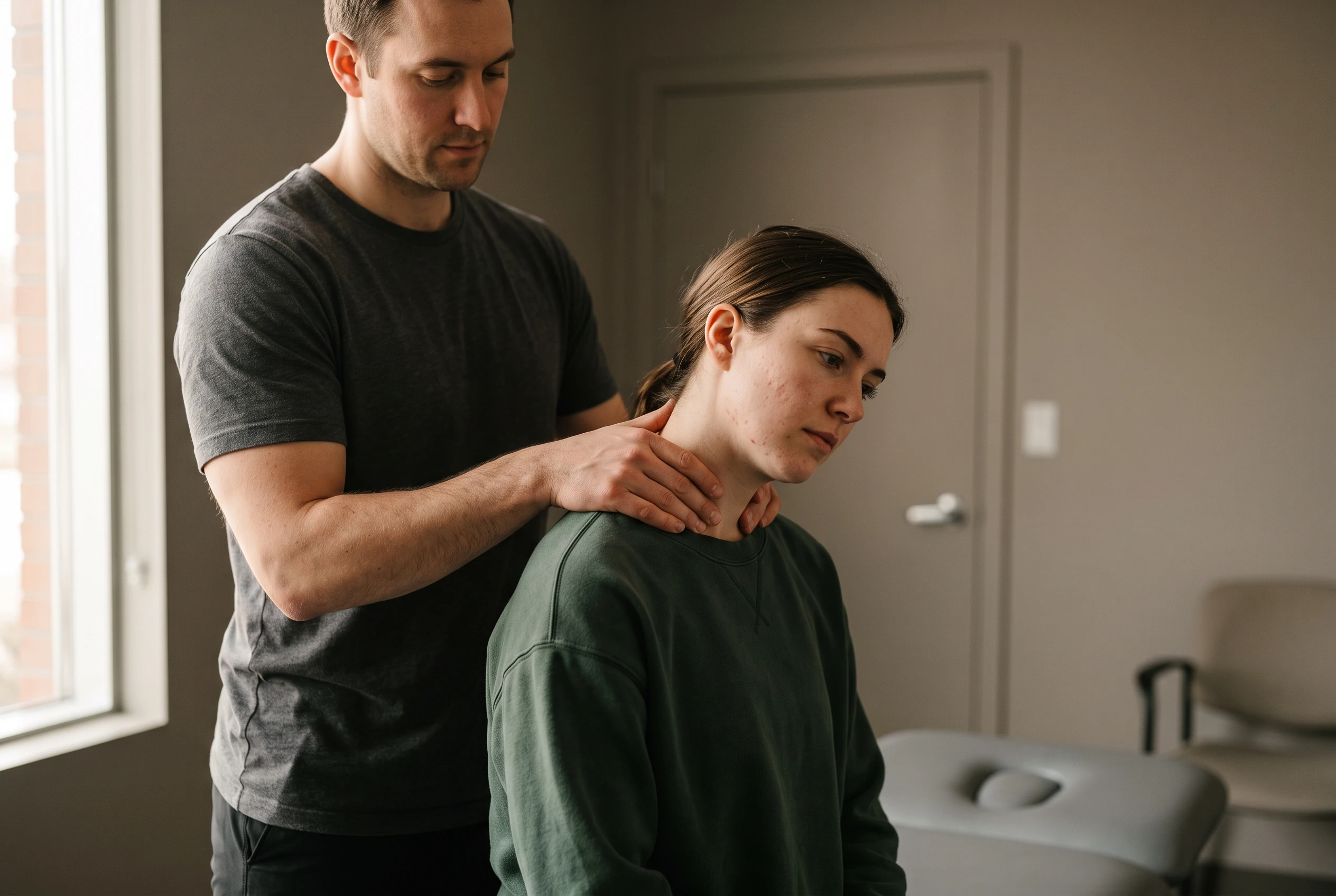
A chiropractor may assess spinal and joint movement, muscle function and the activities affected by the accident. Chiropractic care can include education, exercise and hands-on approaches selected for the individual's presentation. If you are deciding whether to begin with physiotherapy or chiropractic, call the clinic and describe your symptoms. The team can help you choose a suitable first appointment.
Care can be coordinated when more than one practitioner is involved. That coordination should reduce conflicting instructions and keep the focus on shared functional goals.
Pro Motion Calgary has several disciplines in one South Calgary clinic. Depending on your assessment, preferences and authorized coverage, motor vehicle accident rehabilitation may involve:
Not everyone needs every service. More appointments do not necessarily mean a better plan. Each recommendation should have a purpose, and you should understand how it relates to the goals you discussed during assessment.
Recovery is easier to manage when the plan accounts for real life. Tell your practitioner how long you need to sit or drive, whether your job involves lifting or repetitive movement, and which family or household tasks are difficult. Those details help turn general exercises into a plan that prepares you for the activities that matter.
A gradual return does not always mean waiting until every symptom is gone. It may involve shorter periods of an activity, changes to pace or position, planned breaks and a step-by-step increase in load. Your practitioner can help you monitor the response and adjust the progression. If your employer or insurer needs clinical information, ask the clinic what documentation can be provided and whether any authorization is required.
Bring your claim number, insurer details and any forms you have received. The clinic can complete the treatment-provider portions that fall within its role and provide records or updates when properly authorized. Requirements differ between claims, so confirm what your insurer needs instead of assuming that another person's process will be identical to yours.
Insurance coverage is not the same as a clinical recommendation. Your practitioner is responsible for assessing you and explaining suitable care. Your insurer determines what it will approve or reimburse under the claim. If coverage changes, talk with the clinic before cancelling or changing the plan so you understand the available options and any costs.
Shockwave therapy is not a standard treatment for every car-accident injury. It would not be chosen simply because a collision occurred. A physiotherapist may consider it later when a persistent tendon or soft-tissue concern is part of the clinical picture and the person has been assessed for suitability.
If shockwave is discussed, the physiotherapist should explain which finding it is intended to address, what other rehabilitation will continue and how response will be reviewed. Acute neck pain, headaches, dizziness or general post-collision soreness need their own assessment and should not be grouped under a single treatment approach.
Patients sometimes receive advice from several people after an accident: an insurer, physician, employer, family member and more than one clinician. It can become difficult to know which instruction to follow. When your practitioners work in the same clinic, they can communicate about the main findings and goals with your consent.
Coordination does not mean every provider treats the same area. It means the plan has a clear direction. One practitioner may lead the rehabilitation while another addresses a specific need. You should still know who to contact with questions and what each part of the plan is meant to accomplish.
Pro Motion Calgary is located at 403 – 11012 Macleod Trail SE in the Southcentre Executive Tower, near Southcentre Mall. The clinic provides MVA assessment and rehabilitation for patients in South Calgary and nearby communities. Physiotherapy and chiropractic appointments are available, with other disciplines in the clinic when they are appropriate for the plan.
When you call, tell the team that the appointment relates to a motor vehicle accident. Have your claim information nearby if it is available. If you do not know which practitioner to book, describe your symptoms and the clinic can help you choose a starting point. Treatment recommendations will be made after the assessment.
The initial assessment is generally completed by a physiotherapist or chiropractor. The right starting point depends on your symptoms and preferences. The clinic can help you choose when you call.
Contact your insurer as soon as practical and bring the claim information you have. If a claim number is still pending, call the clinic to ask what is needed to reserve the appointment and how billing would be handled.
Referral and reimbursement requirements depend on the service, insurer and claim. Check with your insurer and bring any medical documents you already have. The clinic can explain its booking requirements but cannot guarantee how an insurer will apply your policy.
No. Coverage and approval depend on the claim, insurer requirements and applicable Alberta processes. The clinic can provide the clinical and administrative information required from the treatment provider, but it cannot guarantee approval.
Bring your claim number, insurer and adjuster information, identification, relevant forms and any reports or instructions from other healthcare providers. Wear clothing that allows the practitioner to assess the affected area comfortably.
Report new symptoms to your insurer and mention when they began during your clinical assessment. Seek urgent medical care if symptoms are severe, worsening or concerning. The practitioner will decide whether rehabilitation assessment is appropriate or whether medical follow-up should come first.
Yes, when the assessment supports it and coverage is available. The clinic can coordinate disciplines, but the plan should remain focused. You do not need to book every available service.
Book online in under two minutes, or call our clinic and talk to a real person about where to start.