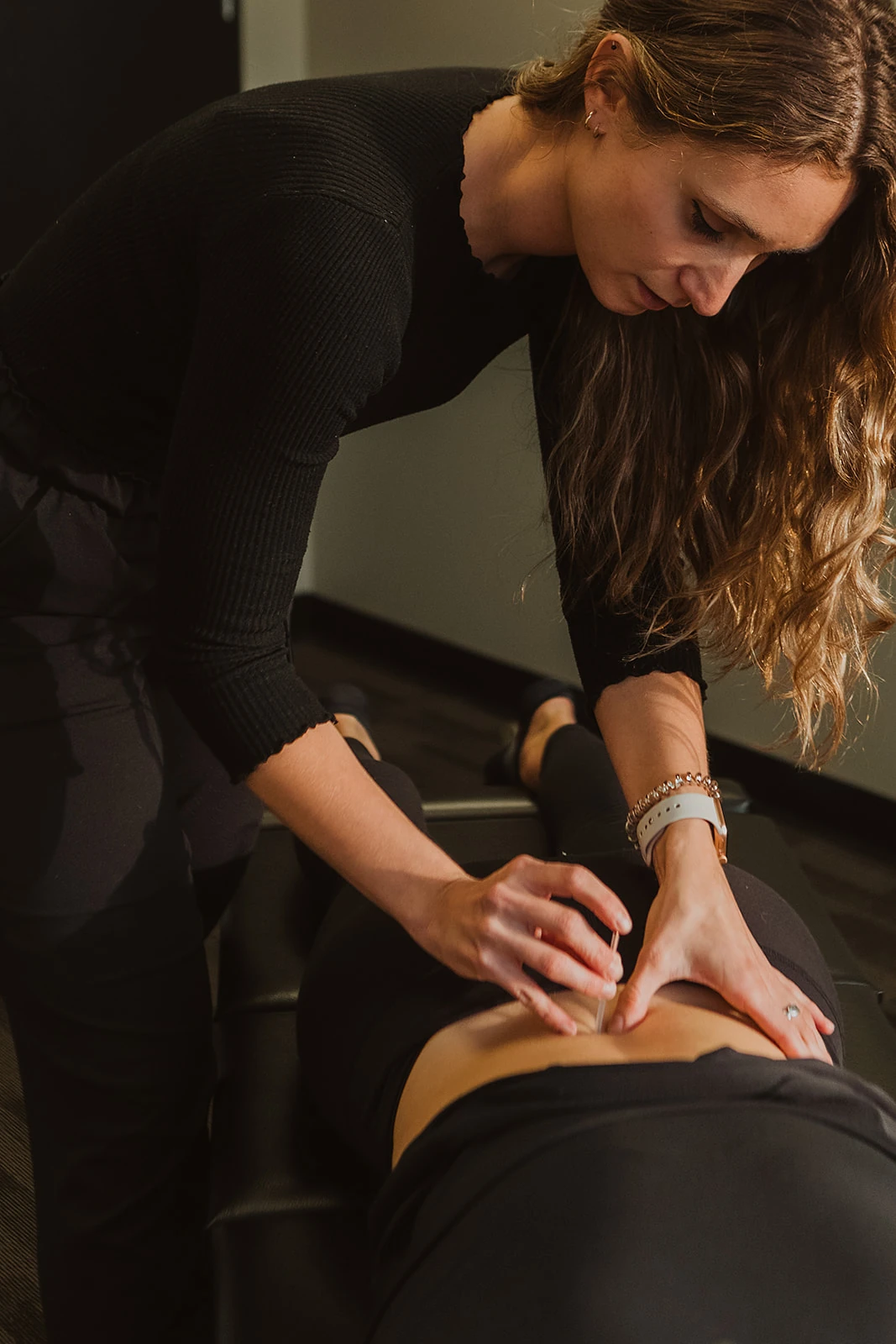
Your body keeps score of every awkward sleep position, every hour hunched over a laptop, and every time you lifted something the “wrong” way. But here’s the thing – it also remembers what it feels like to move freely, without that constant background noise of discomfort.
That’s what we do at Pro Motion Calgary. We help your body remember how good it can feel.
Located in the Southcentre Executive Tower right off Macleod Trail, Pro Motion Calgary has been serving South and Southeast Calgary since 2022. We’re conveniently located next to Southcentre Mall and directly across from the Anderson LRT station, making us easily accessible whether you’re coming from Willow Park, Acadia, or anywhere in the surrounding communities.
Your body doesn’t care about fancy medical jargon. It just wants to move without pain. Whether you’re dealing with a crick in your neck from too many Zoom calls or lower back pain that’s making you walk like you’re 90 years old, we speak your language and work to address your problems.
We’re not just another chiropractor in Calgary. Pro Motion Calgary is the holistic health clinic that understands what it’s like to have pain control your day. Maybe you can’t pick up your kids without wincing. Maybe you’re taking three Advil before your morning run. Maybe you’ve been putting off that hiking trip to Banff because your back “isn’t quite right.”
Those days could be behind you.
Our approach is straightforward: listen to what’s wrong, figure out why it’s happening, and work to address it using evidence-based methods. We focus on treatment plans that are realistic for your situation. No complicated explanations that leave you more confused than when you walked in.

Your jaw shouldn’t hurt when you eat a sandwich. If you’re dealing with clicking, popping, or pain when you chew, you know how frustrating TMJ can be. Regular dentists often miss the connection between jaw problems and neck tension.
Here’s what most people don’t realize: your jaw pain might be coming from tight muscles in your neck and shoulders. Hours hunched over a computer in downtown Calgary offices create conditions that can contribute to TMJ issues. We treat the whole system, not just the symptoms.
Our TMJ treatment combines gentle adjustments with specific muscle work that addresses the tension causing your jaw to misalign. Think about being able to enjoy that corn on the cob at Stampede again, or finally getting through a chewy bagel without wincing.
Sciatica feels like someone’s running electricity down your leg. That shooting pain, numbness, or tingling that travels from your lower back through your hip and down your leg isn’t something you should “just live with.”
Many Calgary residents develop sciatica from long commutes on Deerfoot Trail or hours sitting at desk jobs in the downtown core. The piriformis muscle gets tight and irritated, pressing on your sciatic nerve like a garden hose with someone standing on it.
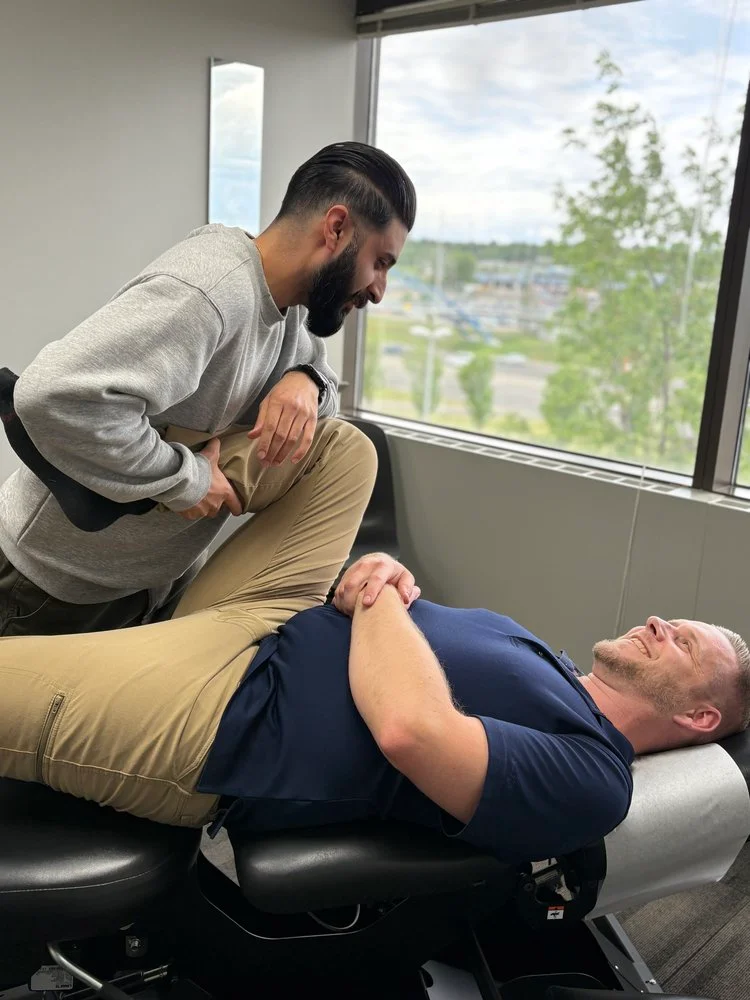
At Pro Motion Calgary, we use targeted adjustments and soft tissue techniques to address the pressure on your sciatic nerve. The goal isn’t just to manage the pain – it’s to work on the underlying problem that may be contributing to it.

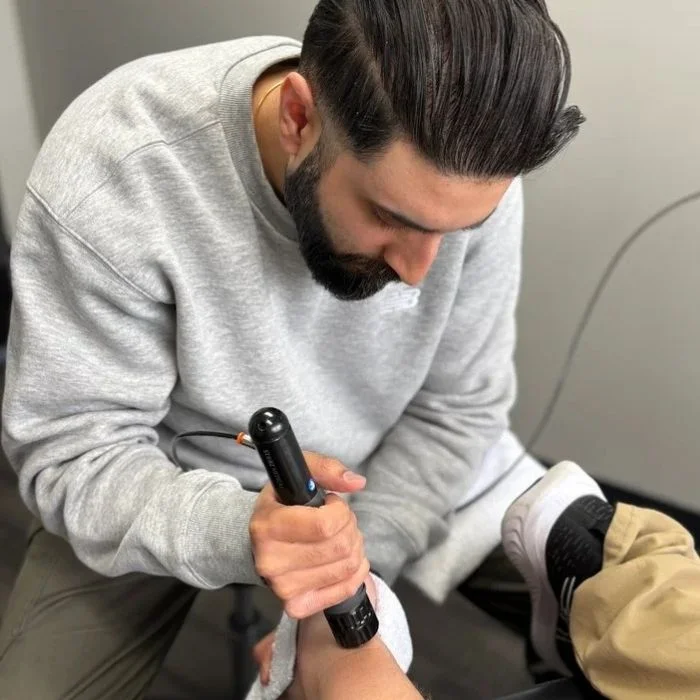
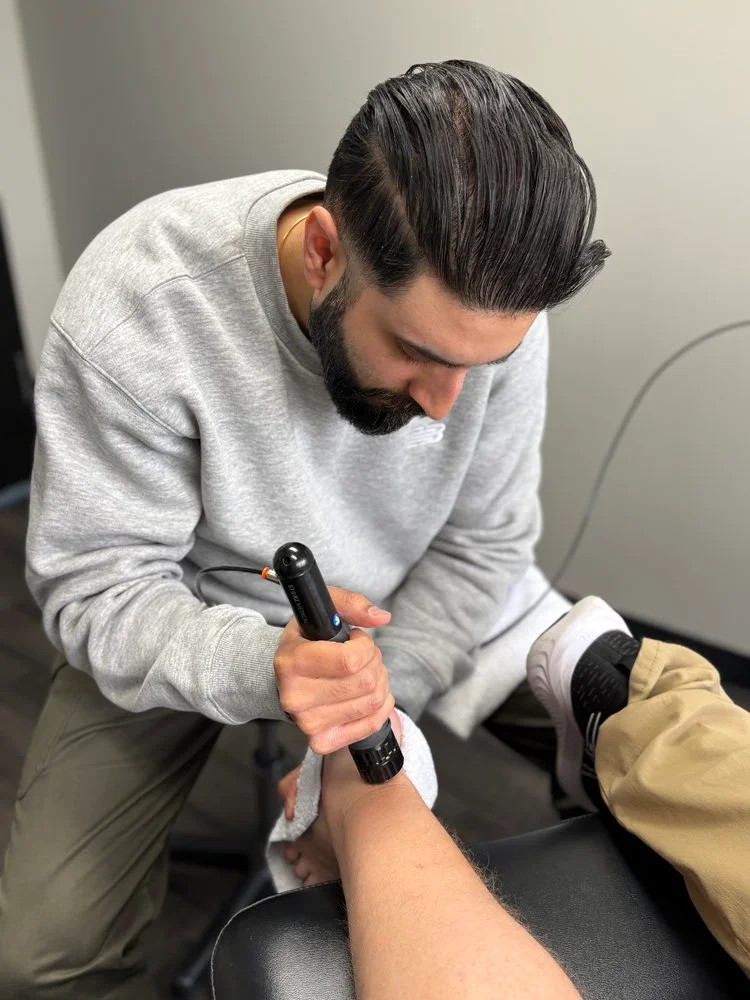
Sometimes your body needs a wake-up call to start healing properly. Shockwave therapy delivers acoustic waves to injured tissue, jumpstarting your body’s natural healing process. It sounds more intimidating than it actually is.
This treatment works particularly well for stubborn issues like plantar fasciitis, tennis elbow, and chronic muscle strains that haven’t responded to other treatments. The waves increase blood flow to the area and help break down scar tissue that’s preventing proper healing.
Imagine being able to lace up your running shoes without that familiar dread of heel pain, or finally picking up that tennis racket that’s been collecting dust in your closet.
Active Release Therapy (ART) is like having someone untangle the knots in your muscular system. We use specific hand positions and patient movements to break up adhesions and restore normal muscle function.
This technique works well for repetitive strain injuries common in Calgary’s tech industry. Picture being able to type all day without that burning sensation in your forearms, or reaching for your mouse without your shoulder blade feeling like it’s tied in knots.
Concussions aren’t just a hockey player’s problem. You can get a concussion from a car accident on Crowchild Trail, a slip on icy sidewalks, or even whiplash from a minor fender-bender.
Many people don’t realize that concussion symptoms often involve neck and upper back problems. Headaches, dizziness, and concentration issues can persist long after the initial injury if the cervical spine isn’t properly treated.
Our concussion treatment addresses both the neurological and musculoskeletal aspects of head injuries. We work closely with other healthcare providers to ensure you get comprehensive care that addresses all aspects of your recovery.

Lower back pain during pregnancy isn’t “just part of the process.” Neither is that shooting pain in your hip or the headaches that seem to appear out of nowhere. Gentle chiropractic adjustments may provide relief without medications that might affect your baby.
We use pregnancy-specific techniques and equipment to help ensure you’re comfortable during treatment. Many expectant mothers in Calgary find that regular chiropractic care helps them sleep better and may reduce morning sickness.
Having a baby is like running a marathon, then immediately starting a new job that requires you to be on call 24/7. Your body needs time and support to recover from pregnancy and childbirth.
Postpartum women often develop “mom posture” – rounded shoulders and forward head position from constantly looking down at their baby. Hours of feeding, whether breastfeeding or bottle feeding, create upper back and neck tension that can lead to headaches and arm pain.
Our postpartum chiropractic care helps address spinal alignment and the muscle imbalances that develop during pregnancy and early motherhood. We also provide exercises and stretches you can do at home between feedings and diaper changes.
Pain doesn’t have to be your normal. Whether you’re dealing with acute injury from a weekend warrior mishap in Fish Creek Park or chronic issues that have been building up over years of desk work, Pro Motion Calgary has the tools and experience to work with you.
Our clinic in the Southcentre Executive Tower serves patients throughout South Calgary and beyond. We’re just minutes away from communities like Willow Park, Acadia, Haysboro, Kingsland, and Millrise. With convenient access from Macleod Trail and proximity to the Anderson C-Train station, getting to your appointments is easy.
Pro Motion Calgary
403 – 11012 Macleod Trail SE
Calgary, AB T2J 6A5
Phone: (403) 452-5450
Email: info@promotioncalgary.com
Clinic Hours:
Monday – Thursday: 7:30AM – 8:00PM
Friday: 7:30AM – 6:00PM
Saturday: 9:00AM – 3:15PM
Pro tip: If you’re booking after 6pm, just use the intercom at the east entrance near the Shell Gas Station. We’ll buzz you right in.
Every treatment plan is customized to your specific needs, goals, and lifestyle. A competitive cyclist has different needs than a busy parent or a construction worker. We take the time to understand what matters to you and create a plan that fits your life.
Don’t spend another day wondering if your pain will get better on its own. We encourage you to address concerns sooner rather than later, as many issues may be more manageable with early intervention.
Ready to explore your options? Call Pro Motion Calgary at (403) 452-5450 to schedule your consultation, or book online at promotioncalgary.com . Take the first step toward exploring how we might help you feel better.
Located in South Calgary’s Southcentre Executive Tower, Pro Motion Calgary is here to work with you toward better movement and comfort. Because life’s more enjoyable when you’re not dealing with pain.
Yes, chiropractors can help with sciatica , depending on the underlying cause and severity of the condition.
Sciatica refers to pain caused by irritation or compression of the sciatic nerve , often due to a herniated disc, spinal stenosis, or muscle tension (like piriformis syndrome). Chiropractors use non-invasive techniques to reduce pressure on the nerve, improve spinal alignment, and restore mobility.
Common chiropractic treatments for sciatica include:
Yes, chiropractors can help manage scoliosis , but their role is typically supportive rather than corrective—especially in adults or in more severe cases.
Scoliosis is a condition where the spine curves abnormally to the side. While chiropractic care won’t reverse the curvature , it can help reduce pain, improve mobility, and support overall spinal function .
How chiropractors may help with scoliosis:
Yes, chiropractors can help with certain types of knee pain , especially when it’s related to joint alignment, muscle imbalances, or referred pain from the hips, pelvis, or lower back.
While chiropractors don’t replace orthopedic specialists for serious structural damage (like a torn ACL), they can be very effective in reducing inflammation, improving joint mechanics, and supporting mobility .
How chiropractors help with knee pain:
Common conditions chiropractors treat:
Yes, chiropractors can help with certain types of vertigo , particularly when it’s caused by issues in the neck or inner ear—like cervicogenic vertigo or benign paroxysmal positional vertigo (BPPV) .
How chiropractors may help with vertigo:
Chiropractors are most effective when vertigo is related to:
Yes, chiropractors can help with pinched nerves , especially when the cause is related to spinal misalignment, disc issues, or muscle tension putting pressure on nearby nerves.
A “pinched nerve” (also called nerve impingement or compression ) often results in pain, tingling, numbness, or weakness , commonly in the neck, back, arms, or legs. Chiropractic care offers non-invasive, drug-free relief by addressing the root cause of the compression.
How chiropractors help with pinched nerves:
Common conditions involving pinched nerves:
In Canada, chiropractors are regulated healthcare professionals , but they are not medical doctors (MDs) .
Here’s what that means:
Key differences from MDs:
So while they hold the title “Doctor” based on their degree, they are not medical doctors , but are highly trained specialists in musculoskeletal care.
Chiropractors treat back pain using non-invasive, hands-on techniques aimed at relieving pressure, improving spinal function, and promoting natural healing.
Common chiropractic treatments for back pain include:
1. Spinal Adjustments (Manipulation)
2. Soft Tissue Therapy
3. Stretching & Strengthening Exercises
4. Postural and Ergonomic Advice
5. Lifestyle & Activity Modifications
Chiropractic care is especially effective for:
Yes, you can see a chiropractor while pregnant , and many women find chiropractic care helpful for managing the physical changes and discomforts of pregnancy.
Chiropractic care during pregnancy can help:
Chiropractors trained in prenatal care:
Common issues treated:
Always ensure your chiropractor is experienced in prenatal care , and speak with your OB or midwife if you have a high-risk pregnancy or medical concerns.
No, chiropractors are not physiotherapists —they are two distinct healthcare professions, though they sometimes treat similar conditions like back pain, joint problems, or sports injuries.
Key differences:
Chiropractors
Physiotherapists (Physical Therapists)
Can they work together?
Yes. Many clinics offer integrated care , where chiropractors and physiotherapists collaborate to provide the most effective treatment plan for a patient.
Picture waking up with a locked jaw that won't open properly. You try to yawn but your jaw clicks and pops like an old door hinge.…
Learn more →That shooting pain down your leg that makes you catch your breath? You're not alone. When sciatica hits, simple things like gettin…
Learn more →Book online in under two minutes, or call our clinic and talk to a real person about where to start.